HVAC Fire Safety - I’m not sure how many HVAC technicians have heard of on-the-job horror stories. Whether the job was commercial or residential. However, I am certain they have happened as I have heard of these horror stories happening to others.
Whether you have ever heard of it happening to others or even if it has happened to you it is important that we remain forever vigilant. This is absolutely true when it comes to fire safety on the job. Especially when we are constantly using fire as a part of our job.
And especially for silver soldering (brazing), soft soldering, or even when we are working on gas or oil boilers or furnaces. Here is an account of a few things that I’ve personally experienced and the lessons learned from these occurrences.
Bacharach Combustion Analyzer Furnace Testing - The combustion analyzer is used to test gas and oil furnaces to make sure the combustion process is as efficient as possible. This multi-function HVAC test instrument can also be used to test spaces for carbon monoxide, test building pressure, all in addition to testing the combustion process of the furnace.
The combustion analyzer allows an HVAC technician to test the flue temperature, the amount of oxygen in the furnace flue gases, the amount of carbon monoxide in the flue gases, the amount of carbon dioxide in the flue gases, and the pressure of the flue. All these readings are necessary so the HVAC technician can make adjustments to the burner settings to ensure efficient combustion using the combustion analyzer. (more…)
HVAC Careers - So you want to become an HVAC Technician and want to know how to find a successful career? It’s not easy but here’s some help for you. First of all, you need a good foundation of the basics and it would help if you understood the different types of jobs you can find by pursuing a career in HVAC. (more…)
Air Conditioning Preventive Maintenance | HVAC Spring Cleaning - Do You Benefit from Maintenance Agreements?
Air conditioning preventive maintenance is a thorough check of the air conditioning system by a professional HVAC Technician. The technician will check the following:
What is NATE? HVAC Education NATE Certification - NATE stands for North American Technician Excellence and NATE is a certification group that oversees the training, testing, and certification of HVACR technicians throughout North American. NATE is highly respected throughout the HVACR industry and an HVAC technician who achieves NATE certification is considered very knowledgeable and skilled in the HVAC trade or HVAC certification specialty. It is a step up in heating and cooling education for HVAC Techs. (more…)
Chapter Three NEC and HVAC - Chapter Three in the NEC covers Wiring Methods which includes how the wiring is supposed to run, the conduit for wiring, outlets, junctions, and switch points, and a host of other topics about the proper way to run wiring.
HVAC Technicians will be familiar with piping support as is required in the Mechanical Code and electricians must follow some of the same rules when running conduit and add support for the conduit. (more…)
HVAC Technician Tools - I can remember when I first got out of HVAC school a few years back I wanted to know what kind of basic tools I needed to begin my work as an HVAC technician. Of course, I had lofty goals and wanted to rise to the top but my expectations at the time matched my skill level. That skill level was a lot of book knowledge and not a lot of field experience.
After all, admittedly there are many lights that do not turn on in the classroom that does turn on in the field after some experience. Stress can turn some light bulbs on while others turn on easily after you see something for real the first time instead of reading about it in a book. (more…)
Warning!! blowers can cause injury if you do not turn the power off! Additionally, blowers that are belt-driven can be harmful to loose clothing and fingers. Be very cautious when working around moving parts such as blowers.
Air Handler Blower Motor - All air handling units have a blower located inside the air handler cabinet. The air handler blower motor has a motor that drives it. Some air handling unit blowers are direct drive and some are belt driven.
Many light commercial and residential blowers are direct drive blower motors by the motor’s shaft while many commercial air handling units are belt driven by the blower motor and some sheaves attached to the blower motor shaft and the shaft attached to the blower wheel.
Some sheaves are adjustable and some are not. If the belt is slipping always change the belt first before adjusting the sheave. Adjusting the sheave can cause the unit to produce more or less than designed airflow. Sheaves are typically set by Testing and Balancing HVAC Technicians. (more…)
This photo shows the air handler blower compartment. This is how the air handler is opened when the blower needs service or repair. The evaporator coil is on top of the blower which makes this an upflow air handling unit. The supply air ductwork will be above the AHU. Since this air handler is installed in a closet then the ductwork is installed in the ceiling and makes this an ideal installation for AC since cool air falls. (more…)
Air Conditioning Service Repair - No matter what name brand (York, Trane, Carrier, Goodman, Lennox, Rheem) of air conditioning and/or heating unit you purchase some time or the other you will need to have that air conditioning and heating equipment checked for a problem and repaired. Even if you have regular air conditioning maintenance done. While there are air conditioning and heating manufacturers that engineer quality into their air conditioning and heating equipment, that equipment is prone to breakdown simply because it is a mechanical/electrical device and will need repair sometime throughout its useful life. (more…)
HVAC Tip - Air Conditioner & Heat Pump Tips: Additional Helpful Hints:
Always change your air filter on a monthly basis
Make sure all your supply vents are open and unobstructed
Keep area clean around indoor unit especially the return grills
Keep outdoor units free of leaves, grass, and debris including trash cans and/or children's toys or playthings like small plastic pools or playhouses.
Additionally your service technician will appreciate you not planting holly bushes near the outside unit
Lastly have system serviced every six months - once for heating and once for cooling before the season starts
This website uses cookies to improve your experience. We'll assume you're ok with this, but you can opt-out if you wish. Cookie settingsACCEPT
Privacy & Cookies Policy
Privacy Overview
This website uses cookies to improve your experience while you navigate through the website. Out of these cookies, the cookies that are categorized as necessary are stored on your browser as they are essential for the working of basic functionalities of the website. We also use third-party cookies that help us analyze and understand how you use this website. These cookies will be stored in your browser only with your consent. You also have the option to opt-out of these cookies. But opting out of some of these cookies may have an effect on your browsing experience.
Necessary cookies are absolutely essential for the website to function properly. This category only includes cookies that ensures basic functionalities and security features of the website. These cookies do not store any personal information.
Any cookies that may not be particularly necessary for the website to function and is used specifically to collect user personal data via analytics, ads, other embedded contents are termed as non-necessary cookies. It is mandatory to procure user consent prior to running these cookies on your website.


 HVAC Careers - So you want to become an HVAC Technician and want to know how to find a successful career? It’s not easy but here’s some help for you. First of all, you need a good foundation of the basics and it would help if you understood the different types of jobs you can find by pursuing a career in HVAC.
 Air Handler Blower Motor - All air handling units have a blower located inside the air handler cabinet. The air handler blower motor has a motor that drives it. Some air handling unit blowers are direct drive and some are belt driven.
 This photo shows the air handler blower compartment. This is how the air handler is opened when the blower needs service or repair. The evaporator coil is on top of the blower which makes this an upflow air handling unit. The supply air ductwork will be above the AHU. Since this air handler is installed in a closet then the ductwork is installed in the ceiling and makes this an ideal installation for AC since cool air falls.
 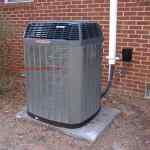 Air Conditioning Service Repair - No matter what name brand (